Chapters
DevSecOps Explained: How to Seamlessly Integrate Security into DevOps for Safer Software Delivery
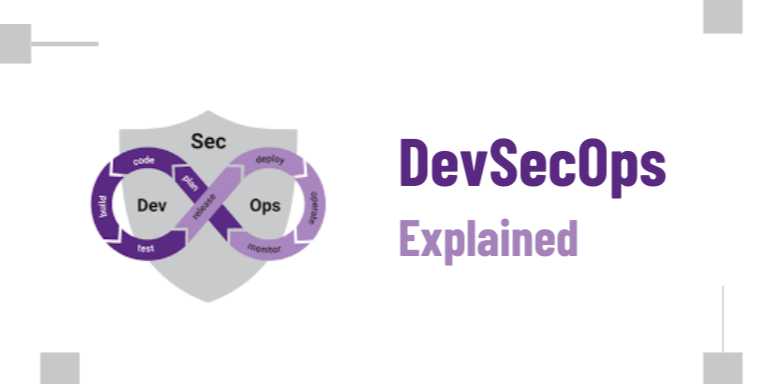

📘 Chapter 5: DevSecOps at Scale — Culture, Governance, and Compliance
🔍 Introduction
Scaling DevSecOps across an organization transcends mere
tool integration; it necessitates a profound cultural shift, robust governance
frameworks, and stringent compliance adherence. This chapter delves into the
strategies and best practices essential for embedding security seamlessly into
every facet of the software development lifecycle (SDLC) at scale.
🏢 Section 1: Cultivating
a DevSecOps Culture
A successful DevSecOps implementation hinges on fostering a
culture where security is a shared responsibility:
- Leadership
Endorsement: Executive buy-in is crucial to drive the cultural
transformation required for DevSecOps.
- Cross-Functional
Collaboration: Encourage collaboration between development,
operations, and security teams to break down silos.
- Continuous
Learning: Implement regular training sessions to keep teams updated on
the latest security practices and threats.
- Empowerment:
Provide teams with the autonomy to make security decisions within their
workflows.
🛡️ Section 2:
Establishing Robust Governance
Governance in DevSecOps ensures that security policies and
procedures are consistently applied across the organization:
- Policy
Definition: Clearly define security policies that align with
organizational goals and regulatory requirements.
- Standardization:
Standardize security practices across all teams to ensure uniformity.
- Automation:
Leverage automation tools to enforce policies and reduce manual errors.
- Monitoring
and Auditing: Implement continuous monitoring and regular audits to
ensure compliance and identify areas for improvement.
📜 Section 3: Ensuring
Compliance
Compliance is a critical component of DevSecOps, especially
in regulated industries:
- Regulatory
Mapping: Map organizational processes to relevant regulatory
requirements (e.g., GDPR, HIPAA, PCI DSS).
- Compliance
as Code: Integrate compliance checks into the CI/CD pipeline to
automate validation.
- Documentation:
Maintain thorough documentation to demonstrate compliance during audits.
- Continuous
Assessment: Regularly assess compliance posture and address gaps
proactively.
🔧 Section 4: Tools and
Technologies
Utilizing the right tools is essential for scaling
DevSecOps:
|
Category |
Tools Examples |
Purpose |
|
CI/CD |
Jenkins, GitLab CI/CD |
Automate build, test,
and deployment processes. |
|
Security Scanning |
SonarQube,
Snyk |
Identify
vulnerabilities in code and dependencies. |
|
Compliance |
Chef InSpec, OpenSCAP |
Automate compliance
checks and reporting. |
|
Monitoring |
Prometheus,
Grafana |
Monitor
system performance and security metrics. |
📈 Section 5: Metrics and
KPIs
Measuring the effectiveness of DevSecOps practices is vital:
- Mean
Time to Detect (MTTD): Average time taken to identify a security incident.
- Mean
Time to Respond (MTTR): Average time taken to respond to a security
incident.
- Deployment
Frequency: How often new code is deployed to production.
- Change
Failure Rate: Percentage of deployments causing a failure in
production.
FAQs
1. What is DevSecOps in simple terms?
DevSecOps is a development approach that integrates security
practices into every stage of the DevOps lifecycle—from coding and building
to deploying and monitoring—making security a shared responsibility among all
team members.
2. How is DevSecOps different from traditional DevOps?
Traditional DevOps focuses on speed and collaboration
between development and operations. DevSecOps adds security as a core
component, ensuring vulnerabilities are addressed early instead of waiting
until after deployment.
3. Why is DevSecOps important today?
With modern apps relying on open-source software, cloud
platforms, and frequent releases, the attack surface is larger than ever. DevSecOps
helps reduce security risks by identifying and fixing issues before they
reach production.
4. What does “shift-left security” mean in DevSecOps?
"Shift left" means moving security practices earlier
in the development cycle, such as during code writing or build stages,
rather than treating security as a final check before deployment.
5. What tools are commonly used in DevSecOps?
Popular tools include:
- SAST:
SonarQube, Checkmarx
- DAST:
OWASP ZAP, Burp Suite
- SCA:
Snyk, WhiteSource
- IaC
scanning: Checkov, tfsec
- Secrets
detection: GitGuardian
- Container
scanning: Trivy, Aqua
6. How does DevSecOps affect developers?
DevSecOps encourages developers to write secure code from
the start, get real-time feedback on security issues, and
collaborate more closely with security teams—all without slowing down their
workflow.
7. Can DevSecOps be adopted gradually?
Yes. Organizations can start small by integrating
basic security tools (like SAST or dependency scanning) into their CI/CD
pipelines and scale up over time with training, automation, and more
advanced practices.
8. What are the biggest challenges in implementing DevSecOps?
Common challenges include:
- Team
resistance to change
- Tool
integration complexity
- Lack
of security expertise among developers
- High
false-positive rates in scanners
9. Is DevSecOps only for large enterprises?
No. DevSecOps benefits organizations of all sizes.
Even small teams can use open-source tools and automated workflows to build
secure software efficiently.
10. How does DevSecOps support compliance and audits?
By automating security testing and documentation,
DevSecOps helps teams maintain continuous compliance with standards like
GDPR, HIPAA, SOC 2, and PCI-DSS, making audits faster and more transparent.
Tutorials are for educational purposes only, with no guarantees of comprehensiveness or error-free content; TuteeHUB disclaims liability for outcomes from reliance on the materials, recommending verification with official sources for critical applications.
Explore Other Libraries

Please allow ads on our site
Kindly log in to use this feature. We’ll take you to the login page automatically.
Login

Comments(0)